Supporting employees from historically underrepresented communities requires more than good intentions.
It also requires us to avoid assuming that someone’s identity tells us everything about their experience.
Here are five ways leaders can approach support more thoughtfully.
1. Don’t assume what someone needs
Ask.
Different people within the same racial or cultural group can have completely different experiences.
2. Don’t make employees your cultural educators
It’s not fair to expect one employee to explain an entire culture or community to the organization.
Organizations should invest in their own learning.
3. Create opportunities—not stereotypes
Don’t assume an employee wants to serve on every diversity committee simply because of their identity.
Ask about their interests and professional goals.
4. Pay attention to advancement
Support isn’t just about making people comfortable.
It’s also about examining access to mentorship, leadership opportunities, professional development, and advancement.
5. Listen when employees tell you about their experiences
You don’t have to immediately have the perfect answer.
Sometimes the most powerful response is:
“Thank you for telling me. What would support look like for you?”
Support begins with listening.
And culturally competent leadership means being willing to learn without placing the burden of that learning on employees.
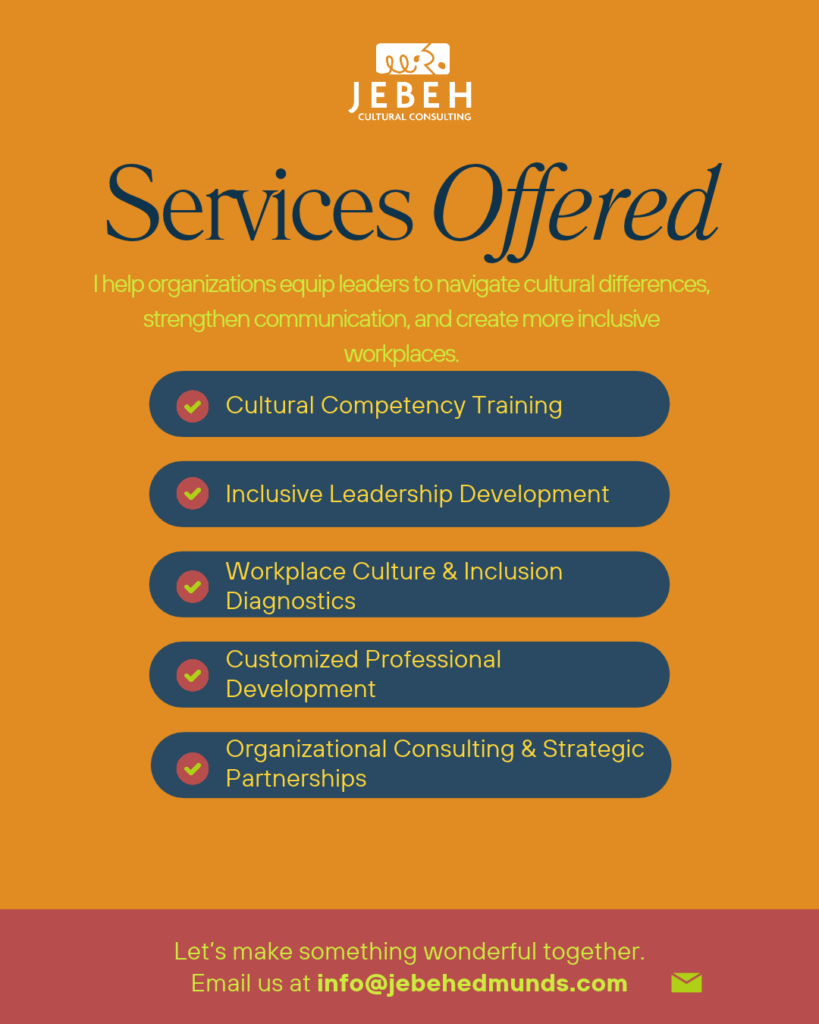
At Jebeh Cultural Consulting, I help organizations build stronger cultural competency and inclusive leadership practices.