Leadership often begins with lived experience.
For many leaders, the lessons that shape their careers start long before professional success—sometimes in childhood, family traditions, or the experience of navigating new cultures.
That is certainly true for Dr. Nelva Lee.
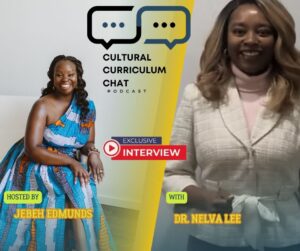
In a recent episode of The Cultural Curriculum Chat Podcast™, I spoke with Dr. Lee about immigration, education reform, entrepreneurship, and the role of personal responsibility in leadership.
Her story reflects the powerful connection between identity, opportunity, and service.
From Panama to the United States
Dr. Lee’s journey began in Panama, where she grew up before moving to the United States as a teenager.
Experiencing life in two different countries gave her a unique perspective on democracy, opportunity, and education.
Like many immigrants, her family emphasized resilience, hard work, and gratitude—values that would later influence her leadership philosophy.
These early experiences shaped her understanding that opportunity often depends on access to education and the systems that support it.
Building a Career Across Healthcare and Education
Dr. Lee went on to build a career that spans healthcare administration, entrepreneurship, and higher education.
She has more than 20 years of experience in healthcare and more than a decade of experience teaching as an adjunct professor. (Gaining the Technology Leadership Edge)
Throughout her career, she has focused on improving systems that serve diverse communities.
One of her most significant contributions is founding MiTio Technologies, a training institute that prepares medical and legal interpreters.
Language access in healthcare and legal settings is often overlooked, yet it is essential for ensuring that people understand their rights, medical conditions, and treatment options.
Without qualified interpreters, communication barriers can lead to serious consequences.
Dr. Lee’s work aims to close that gap.
Why Language Access Matters
Language barriers affect millions of people in the United States.
In healthcare settings, misunderstandings can impact diagnoses, treatment decisions, and patient safety.
In legal settings, language access can determine whether individuals fully understand their rights and responsibilities.
Dr. Lee recognized these challenges early in her career and responded by building programs that train interpreters and translators to work in high-stakes environments.
This work highlights an important reality: cultural competency is not just about awareness—it is about systems that ensure people receive fair and effective services.
Rethinking Education
Dr. Lee has also been a strong voice in conversations about education reform.
She believes schools must rethink how they prepare students for the future.
One idea she advocates for is expanding opportunities for vocational training and trade certifications alongside traditional academic pathways.
This approach recognizes that students have diverse talents and career goals.
Not every student thrives in the same learning environment, and education systems should reflect that reality.
Providing multiple pathways can help students develop practical skills while also building confidence and independence.
Diversity, Inclusion, and Workplace Culture
Another major area of Dr. Lee’s work focuses on diversity, equity, and inclusion in organizations.
She has emphasized that diversity initiatives should not simply focus on numbers or quotas.
Instead, organizations must create environments where employees feel valued, heard, and supported. (Gaining the Technology Leadership Edge)
Research consistently shows that diverse teams can improve innovation, creativity, and organizational performance.
However, those benefits only emerge when organizations actively foster inclusive cultures.
Dr. Lee’s consulting work helps organizations examine hiring practices, workplace culture, and leadership development strategies.
Personal Responsibility and Leadership
In addition to her professional work, Dr. Lee is also an author who writes about personal growth and leadership.
One of her books, Be the Superhero of Your Story, encourages readers to take ownership of their lives and decisions.
Her philosophy emphasizes that while individuals cannot control every circumstance, they can control their responses and choices.
This perspective resonates with many leaders who have faced obstacles or setbacks on their journeys.
Leadership often requires resilience, reflection, and a willingness to keep moving forward.
Lessons for Educators and Leaders
My conversation with Dr. Nelva Lee offered several important insights for educators, policymakers, and organizational leaders.
First, lived experience matters.
Leaders who understand cultural and systemic challenges firsthand often bring valuable perspectives to the solutions they create.
Second, education systems must evolve to support diverse learning styles and career pathways.
And finally, inclusive leadership requires intentional effort.
Creating equitable systems is not just about policy—it is about culture, communication, and accountability.
Culture, Opportunity, and Leadership
Dr. Lee’s story reflects a broader truth: leadership is often shaped by the intersections of culture, identity, and opportunity.
From her early experiences as an immigrant to her work in healthcare, education, and entrepreneurship, she has built a career focused on expanding access and opportunity.
For listeners of The Cultural Curriculum Chat Podcast™, her story is a reminder that leadership can emerge from many different paths—and that meaningful change often begins with a willingness to serve.
Listen to the episode here: https://www.buzzsprout.com/1495555/episodes/18833227